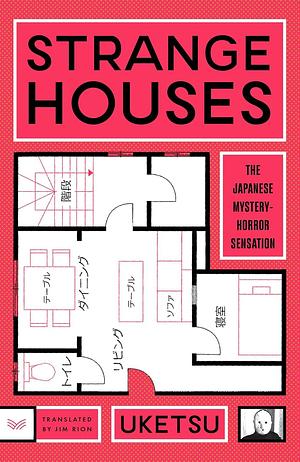
Strange Houses
I have mixed feelings about this book. For one: it hooked me right away; it’s the first book I’ve read cover-to-cover in a written format in years—I’m working on a few other, longer books, but mostly I’m listening to audiobooks. And I was entertained the whole way through. So for that: four stars. But also, it’s kind of silly. For me that was actually probably a good thing; I’m not a big horror reader and I don’t like the feeling of being terrified. So the silliness reduced the initial creepiness to a tolerable level. But now that I’m done, I can’t really shake that silliness.
Within the first few chapters, Uketsu and Kurihara have apparently figured out the absurd scenario at the center of this all, with basically no mistakes. The scenario is silly and far-fetched, and there are so many other ways to read these house plans—sinister ways, even—that the fact that they supposedly got it just right is bothersome.
I’ll say this, though: if it was the author’s intent to leave people theorizing, they’ve certainly got me there. But the most satisfying theory I can come up with just feels a bit too far from any possible author’s intent, or at least any well-written plot:
All of this is why I have to give this book a decent rating: despite the many flaws that can be pointed out, in the end, I was engaged and it’s kept me thinking about it since.